
By Wahid Business News
Addis Ababa | 31 August 2026
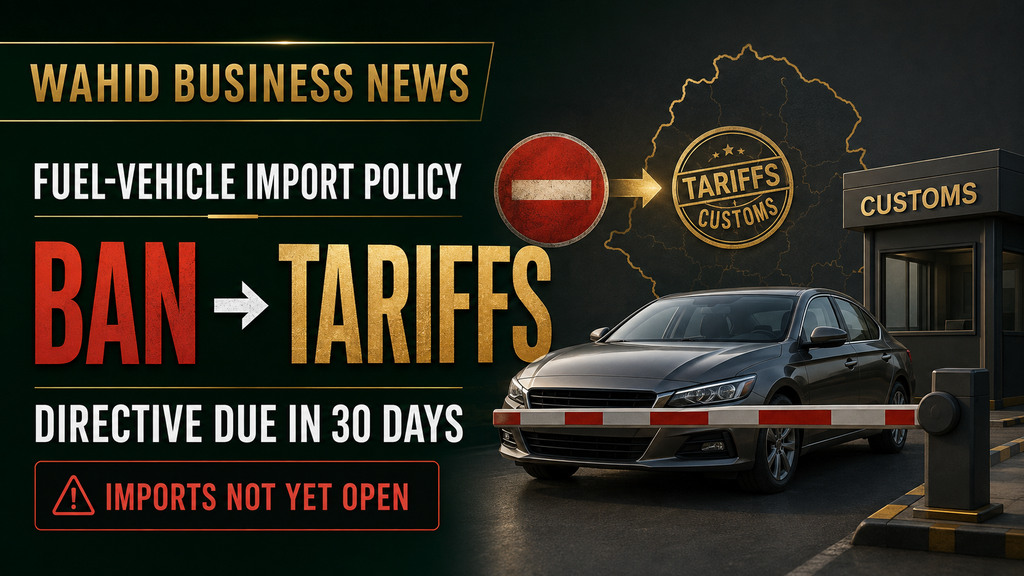
Ethiopia’s Council of Ministers has approved replacing the country’s direct ban on fuel-powered vehicle imports with tariff-based controls, potentially reopening the market to eligible new and used internal-combustion vehicles.
Minister of Trade and Regional Integration Dr. Kassahun Gofe said the policy change is intended to advance Ethiopia’s World Trade Organization accession negotiations while preserving the government’s transition towards electric mobility.
The decision does not mean fuel-powered vehicles can be imported immediately. Relevant government institutions are expected to prepare and publish detailed implementation rules within 30 days, after which an official notice will be issued to vehicle importers.
Until that directive takes effect, the existing import restriction remains operational.
From prohibition to tariff-based regulation
Under the emerging policy, fuel-powered vehicles will no longer be controlled through an outright import ban. Instead, the government intends to discourage their importation through high customs duties, tariffs and related fiscal measures.
The applicable rates have not yet been disclosed. The forthcoming directive is also expected to clarify the effective date, eligible vehicle categories, customs classifications and other import requirements.
It remains unclear whether the policy will cover every internal-combustion vehicle or only specific categories. Importers must await clarification concerning petrol and diesel models, passenger cars, three-wheelers, commercial vehicles, trucks, vehicle-age limits and technical standards.
The government intends to maintain a cost advantage for electric vehicles rather than fully restoring the pre-ban automobile market.
WTO accession drives policy change
Ethiopia introduced restrictions on fuel-powered vehicle imports in early 2024 as part of its electric-mobility strategy and efforts to reduce demand for imported petroleum.
However, quantitative import restrictions have become an issue in Ethiopia’s WTO membership negotiations. At the seventh meeting of the Working Party on Ethiopia’s accession, held on 22–23 April 2026, the government reported progress on eliminating import restrictions considered inconsistent with WTO rules. The negotiations have reached what officials describe as a decisive stage. ( World Trade Organization)
Kassahun previously told WTO members that Ethiopia intended to follow the model used for second-hand clothing. The government removed the direct prohibition on used-clothing imports and replaced it with customs duties, allowing imports while using tariffs to regulate the market. ( The Reporter Ethiopia)
The vehicle decision moves that proposal closer to implementation, although the final commercial impact will depend on the tariff schedule and import conditions contained in the coming directive.
Importers gain a possible legal pathway
Once the rules are published and become effective, licensed vehicle importers could regain a legal pathway for importing qualifying new and used fuel-powered vehicles.
However, high duties could make imported vehicles expensive and limit shipment volumes. Foreign-currency availability, exchange rates, freight costs, vehicle age restrictions and technical requirements will also determine whether imports become commercially viable.
Importers should therefore avoid treating the Council’s decision as an immediate market reopening. Purchase orders and shipping arrangements made before the effective date could face customs or licensing risks if they do not comply with the final directive.
Possible effects on Ethiopia’s vehicle market
The policy could increase competition and expand consumer choice, particularly for buyers concerned about electric-vehicle charging access, battery replacement and long-distance travel.
It may also place competitive pressure on EV prices and after-sales services. Nevertheless, the size of this effect cannot be determined until the government publishes the applicable duties and identifies which vehicle categories are eligible.
The government will also need to balance WTO commitments against foreign-exchange pressures, petroleum-import costs and its investment in electric mobility. High tariffs would provide a mechanism for permitting trade without abandoning the broader policy of encouraging EV adoption.
The next 30 days will be critical for importers, dealers, financial institutions and consumers. The most important details will be the tariff rates, effective date, eligible vehicle types, customs procedures and whether used vehicles will face separate age or environmental standards.