
Key Takeaways:
• 120,000 metric tons — ESL imported aviation fuel and diesel after four decades.
• 80,000 metric tons — jet fuel was transported from Nigeria’s Dangote Terminal.
• 40,000 metric tons — diesel was delivered to Horizon Oil Terminal in Djibouti.
• USD 3.7bn — Ethiopia’s 2024/25 oil imports are expected to rise 8.9%.
• USD 6bn — central bank projects possible fuel-import costs next budget year.
• Birr 116.4bn — proposed EPSE capital injection will come from recurrent budget funds.
• Birr 20bn — proposed fuel subsidy marks a sharp cut from Birr 272bn.
Market Impact:
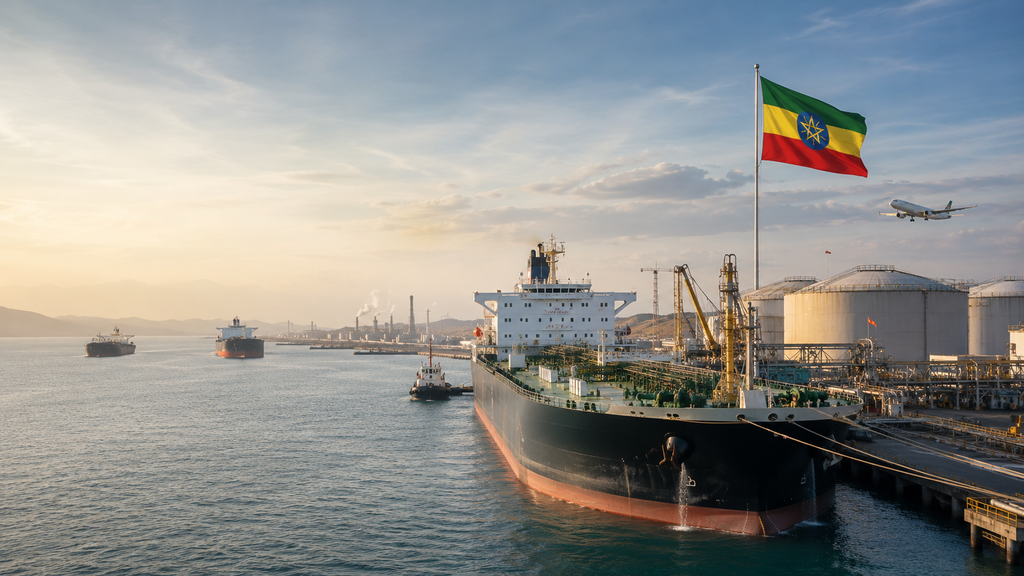
Ethiopian Shipping and Logistics’ return to petroleum import handling marks a major operational shift after nearly four decades outside the sector. The company’s three-voyage shipment from Nigeria’s Dangote Terminal shows Ethiopia is widening supply routes beyond traditional sources amid disruption linked to the Strait of Hormuz.
The imported cargo also highlights the pressure from aviation fuel demand. Bole International Airport and Ethiopian Airlines are driving jet-fuel needs, while limited jet-fuel storage capacity makes supply continuity more sensitive than diesel or gasoline.
The fiscal implications are substantial. Ethiopia already spends at least a quarter of its goods-import budget on oil, with fuel-import costs projected to rise from USD 3.7 billion in 2024/25 to as much as USD 6 billion next budget year, while subsidy reform reduces the proposed fuel subsidy to Birr 20 billion.
Key Numbers:
40 years — ESL’s absence from oil importing — operational return milestone
1986 — Approximate year ESL last imported oil for customers — historical benchmark
120,000 metric tons — Total imported cargo — combined aviation fuel and diesel shipment
80,000 metric tons — Jet fuel imported — aviation supply priority
40,000 metric tons — Diesel imported — domestic fuel supply component
3 voyages — Shipment count — transported by MV Kokolight, MT Mostar and MT Explorer
20% — World oil supply transiting Strait of Hormuz — supply-route exposure
February 28 — Conflict start date cited by officials — disruption timeline
650,000 barrels per day — Dangote refinery current crude-processing capacity — supplier scale
2024 — Dangote Petroleum Refinery began operations — supplier operating timeline
USD 3.7bn — Ethiopia’s 2024/25 oil import estimate — FX burden
8.9% — Expected increase by current budget-year end — import-cost pressure
USD 6bn — Possible fuel-import cost next budget year — central bank projection
July 8 — Upcoming budget year start date — fiscal timing
Birr 116.4bn — Proposed EPSE capital injection — state financing support
Birr 272bn — Actual 2025/26 fuel subsidy reported by Kassahun Gofe — fiscal burden
Birr 100bn — Original 2025/26 subsidy target — exceeded plan
Birr 20bn — Proposed subsidy for coming budget year — planned subsidy reduction
July 2024 — Macroeconomic reform programme launch — subsidy reform framework
Business Signal:
Ethiopia is diversifying fuel procurement, restoring ESL’s role in petroleum logistics and cutting subsidies as oil-import costs threaten to rise toward USD 6 billion.