
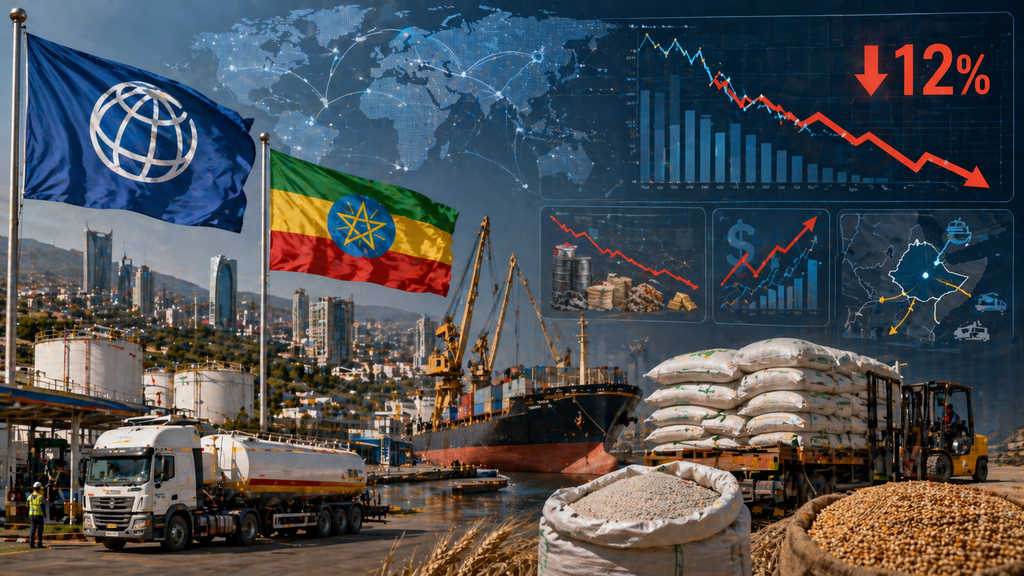
• 12% global commodity price decline projected in 2025, followed by 5% decline in 2026.
• World Bank warned fertilizer and gold prices may remain above 2015–19 averages.
• Ethiopia remains exposed through fuel, fertilizer and food import dependence.
• Import cost volatility affects trade balances, logistics costs and supply-chain planning.
• Commodity shocks may pressure foreign exchange demand and inflation management.
• World Bank links price risks to geopolitical shocks and supply disruptions.
• Lower global prices offer opportunity if Ethiopia improves import-cost transmission.
Why It Matters:
The warning underscores Ethiopia’s vulnerability to external price shocks despite projected commodity easing. For an import-dependent economy, the issue is not only price levels but transmission into fuel costs, fertilizer inputs, inflation and foreign exchange demand. The policy challenge is whether lower global prices translate into domestic relief before new supply shocks emerge.
Key Numbers:
12% projected global commodity price decline in 2025
5% projected decline in 2026
2015–2019 reference average for fertilizer and gold prices
2-year outlook covered in World Bank projections