
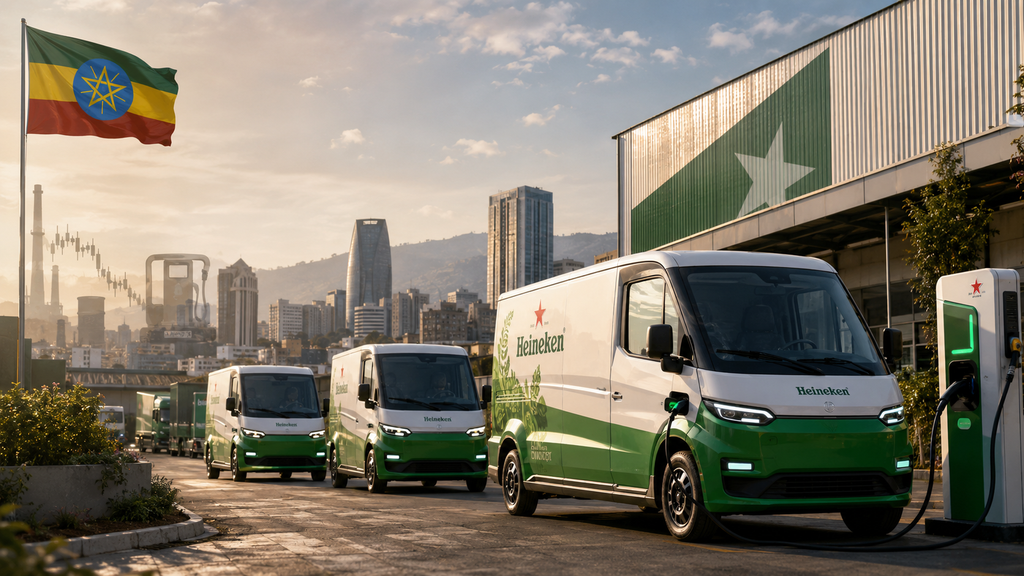
• Br392.3mn was invested by Heineken Ethiopia in 65 electric vehicles for Addis Ababa operations.
• 65 locally assembled EVs will replace older combustion-engine vehicles across company operations.
• 6,579 tonnes of annual carbon emissions are expected to be reduced through the fleet transition.
• Br32.7mn in yearly fuel and maintenance savings is projected from the EV rollout.
• Petrol rose to Br167.50 per litre and white diesel to Br180.46 per litre.
• Ethiopia’s 2025–2030 E-Mobility Strategy targets 500,000 EVs on roads by 2030.
• Heineken links the investment to its 2040 net-zero target and 2030 production carbon-neutrality goal.
Market Impact:
Heineken Ethiopia’s EV investment turns corporate fleet electrification into an operating-cost response to fuel-price volatility. The company’s projected Br32.7mn annual savings show how large distribution businesses can use electric vehicles to reduce fuel and maintenance exposure.
The investment also aligns with Ethiopia’s policy push to localise EV assembly and cut pressure from fuel imports on foreign-currency reserves. With more than a dozen EV assembly plants operating and charging infrastructure expanding, corporate procurement is becoming a channel for Ethiopia’s wider electric mobility strategy.
For beverage, logistics and urban distribution operators, the shift indicates that EV adoption is moving beyond passenger vehicles into commercial fleet management. Addis Ababa’s expanding charging network gives early corporate adopters a practical base for fleet transition.
Key Numbers:
Br392.3mn — Heineken Ethiopia EV investment — Corporate fleet electrification cost
65 EVs — Addis Ababa fleet deployment — Operational transition scale
6,579 tonnes — Annual emissions reduction — Sustainability impact
Br32.7mn — Annual fuel and maintenance savings — Operating-cost reduction
Br167.50/litre — Petrol retail price — Fuel-cost pressure signal
Br180.46/litre — White diesel retail price — Logistics and distribution cost pressure
500,000 EVs — Ethiopia’s 2030 target — National e-mobility scale
Business Signal:
Heineken Ethiopia’s EV rollout shows that corporate fleets are becoming a practical front line in Ethiopia’s effort to reduce fuel-import exposure, lower operating costs and accelerate local electric mobility.