
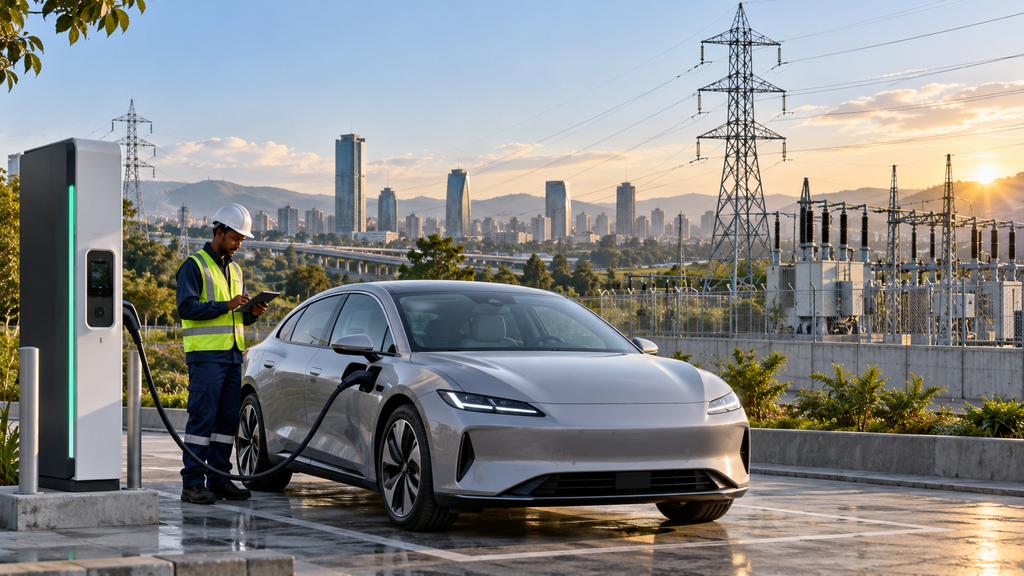
Updated November 3, 2026, from Capital’s November 1 report. Classification revised and sector details added. Thumbnail: editorial illustration.
Key Takeaways
- 45% deployment and 38% enabling-condition scores place Ethiopia in the index’s “risk of stalling” group.
- We Mean Business Coalition developed the 16-country assessment with RMI support.
- 60% of new passenger-car purchases were electric in 2024, according to the analysis.
- 55% of Ethiopians had electricity access in 2023 despite abundant clean generation.
- 2% of residential energy consumption comes from electricity; biomass dominates cooking.
- Industry scores 8/20 for both deployment and enablers, with oil and coal still significant.
- Grid investment, efficiency standards and electrical-worker training are identified as priorities.
Market Impact
Affordable hydropower offers scope to reduce imported-fuel dependence. Limited connections and unreliable networks restrict its industrial benefits.
Transport adoption has advanced faster than wider readiness. Expanding grid and off-grid access remains central to extending electrification into factories and homes.
Key Numbers
- 45% — deployment score — realised progress.
- 38% — enabling conditions — investment readiness.
- 2% — residential electricity share — limited household uptake.
Business Signal
Ethiopia’s clean-power advantage depends on reliable access and infrastructure that support productive use.